Engines Built for Heavy-Duty Commercial Demands
Diesel Engine Swaps in North Little Rock for trucks requiring upgraded power and reliability
Red's Diesel & Auto Repair handles custom diesel conversions that transform truck capability through complete engine replacement and integration. Fleet operators and commercial drivers needing increased towing capacity or extended engine life turn to full diesel swaps when original powerplants no longer meet operational demands. Each installation addresses transmission compatibility, wiring harness integration, and fuel system modifications specific to the replacement engine's requirements.
Performance engine installations involve replacing the entire factory diesel engine with a higher-output unit that requires ECU programming to communicate with existing vehicle systems. Transmission compatibility upgrades accompany most swaps since increased torque output demands clutch pack reinforcement or complete transmission replacement. Wiring and ECU integration determine whether the new engine operates reliably, with harness modifications connecting sensor data between the engine and dashboard systems.
Schedule an on-site evaluation to review your truck's current engine condition and determine swap feasibility.
What Complete Engine Replacement Actually Involves
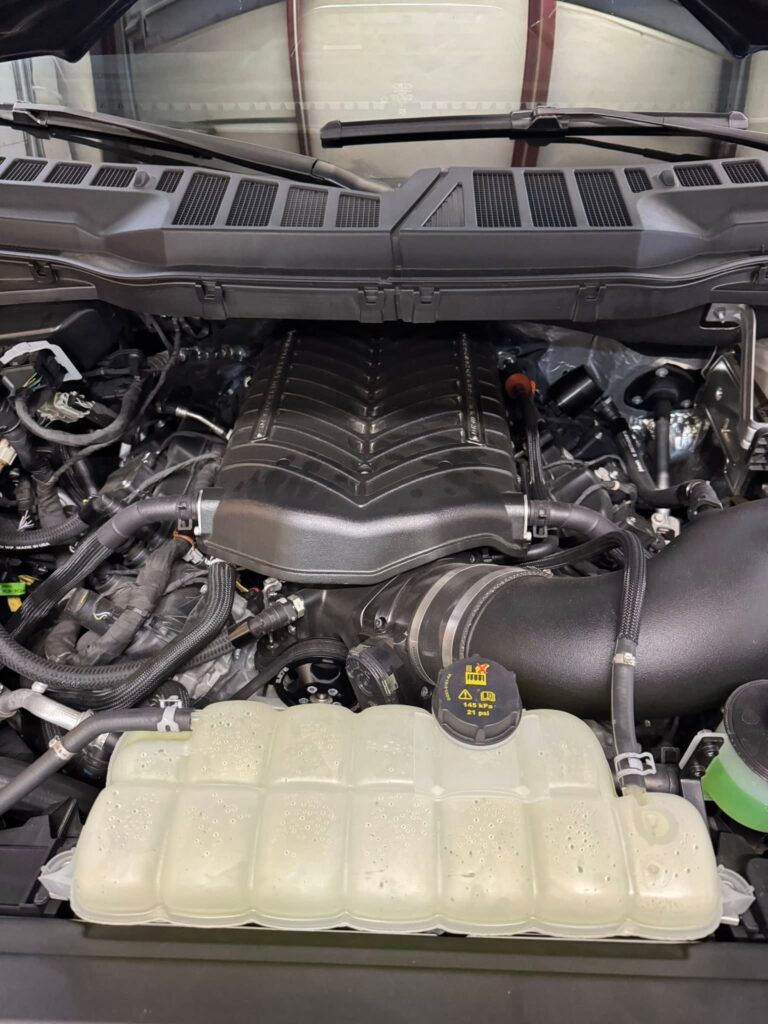
Custom diesel conversions require removing the existing engine, modifying motor mounts to accept the replacement block, and fabricating exhaust routing that clears frame rails and crossmembers. Fuel system modifications include installing high-pressure fuel pumps rated for the new engine's injection system and replacing fuel lines with diameter sizing that supports increased flow demands. ECU integration involves programming the engine control module to recognize transmission shift points, throttle position sensor input, and emissions system feedback.
Once the swap completes, you'll notice immediate throttle response differences and substantially increased pulling power under load. Red's Diesel & Auto Repair tests all electrical connections through diagnostic scanning to verify sensor communication before the truck returns to service. Gauges display accurate readings for oil pressure, coolant temperature, and boost levels specific to the new engine's operating parameters.
Fleet and commercial swaps often involve matching multiple trucks to the same engine platform for simplified parts inventory and maintenance scheduling. Heavy-duty applications require verifying driveshaft length and differential gear ratios accommodate the replacement engine's torque curve without causing drivetrain binding or premature wear.
Questions Commercial Operators Ask Before Engine Replacement
Diesel engine swaps represent significant investment decisions that affect truck operational capability for years. The following addresses practical considerations about compatibility, downtime, and performance outcomes.
What determines whether a specific replacement engine fits my truck model?
Engine swap feasibility depends on frame rail spacing, transmission bell housing bolt patterns, and whether factory motor mounts accept the replacement block dimensions without requiring custom fabrication. Shops in North Little Rock typically verify cross-member clearance and steering component interference before ordering replacement engines.
How does turbo performance integration work with older truck chassis?
Turbocharger installations require fabricating intake piping that routes compressor output to the intercooler without contacting suspension components, and exhaust manifolds must position the turbine housing away from heat-sensitive wiring harnesses. Custom mounting brackets secure the turbo assembly to prevent vibration damage during sustained highway operation.
What fuel system modifications accompany higher horsepower engines?
Performance engine installations demand fuel injectors with increased flow capacity measured in cubic centimeters per minute, along with lift pumps that maintain consistent pressure to the high-pressure injection pump inlet. Fuel filtration upgrades prevent contamination from reaching precision injector components.
When should transmission upgrades happen during the engine swap process?
Transmission compatibility upgrades occur simultaneously with engine installation when the new powerplant produces torque exceeding the factory transmission's rated capacity, requiring clutch pack reinforcement or complete unit replacement before the truck returns to service.
What breaks in period applies after diesel engine replacement?
Newly installed engines require 500 miles of varied-load operation before sustained heavy towing, allowing piston rings to seat properly against cylinder walls and bearing surfaces to develop wear patterns that distribute oil film evenly across journal surfaces.
Red's Diesel & Auto Repair provides detailed compatibility assessments before ordering replacement engines for commercial fleets. Contact the shop at (501) 243-0190 to arrange a vehicle inspection that identifies necessary modifications for your specific swap requirements.